
From October 14th to 17th, the 3rd World Materials Congress (WMC), the 26th IUMRS International Conference on Advanced Materials (IUMRS-ICA), and the 9th World Materials Summit (WMS) (collectively known as 3rd WMC, 9th WMS & IUMRS-ICA 2025) were successfully held at the Guilin International Conference and Exhibition Center. Jointly organized by the Chinese Materials Research Society and the International Union of Materials Research Societies, this premier global academic event in the field of materials science focused on cutting-edge research directions. It featured 37 parallel symposia, covering critical areas such as energy materials, advanced information materials, advanced structural materials, advanced functional materials, biomaterials, and computational materials, thereby establishing a high-level platform for academic exchange and collaboration for materials scientists worldwide.
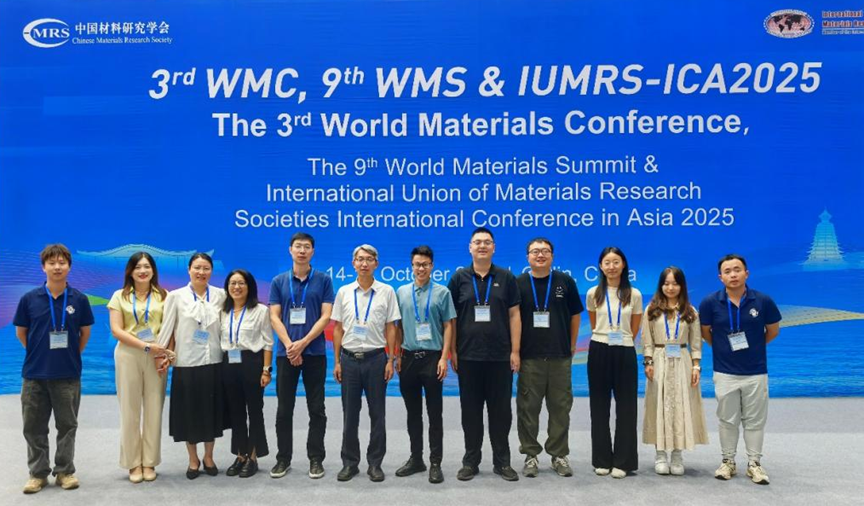
The "Advanced Magnesium-based Alloys (C02)" symposium, organized by the Light Alloy Net Forming National Engineering Research Center (here in after referred to as the "Light Alloy Center"), emerged as one of the highlights of the congress due to its focused topical themes and strong academic lineup. Chaired by Professor Xiaoqin Zeng and Professor Liming Peng, with Academician Javier Llorca, Associate Professor Jingya Wang, Associate Professor Fulin Wang, Professor Boyu Liu (Xi'an Jiaotong University), and Associate Researcher Juan Chen serving as Co-chairs, and Assistant Researcher Xueqiang Wang as Secretary-General. The symposium gathered numerous leading scholars in the field of advanced materials from around the globe. Distinguished participants included Academician Javier Llorca (European Academy of Sciences, IMDEA Materials Institute, Spain), Academician Alan Luo (National Academy of Engineering, USA), Academician Daolun Chen (Canadian Academy of Engineering), and Academician Peidong Wu (Canadian Academy of Engineering). The symposium attracted over 50 scholars from North America, Europe, China, and other regions to present their work, facilitating in-depth discussions on the latest research achievements in the field of magnesium-based alloys.
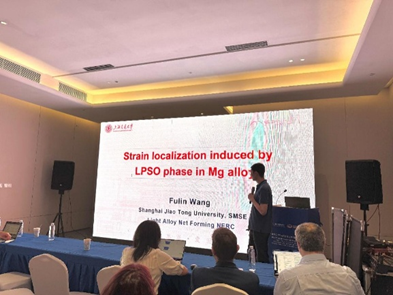
Fulin Wang delivered a keynote report entitled "Strain localization induced by LPSO phase in Mg alloy".
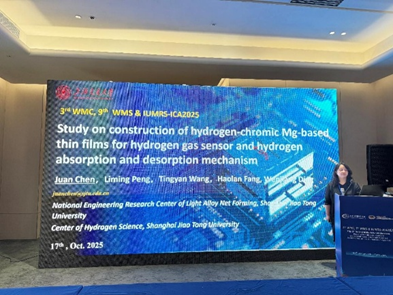
Li Jin presented an invited report titled "Mesoscopic origin of damage nucleation of Mg-RE-Zn alloys containing LPSO phase". Jingya Wang presented an invited report entitled "Anomalous strain hardening via tuning basal/pyramidal dislocation interactions in magnesium alloy". Juan Chen presented an invited report titled "Study on construction of hydrogen-chromic Mg-based thin films for hydrogen gas sensor and hydrogen absorption and desorption mechanism".
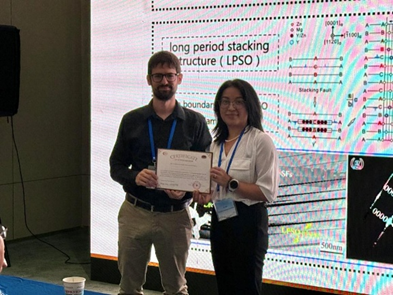
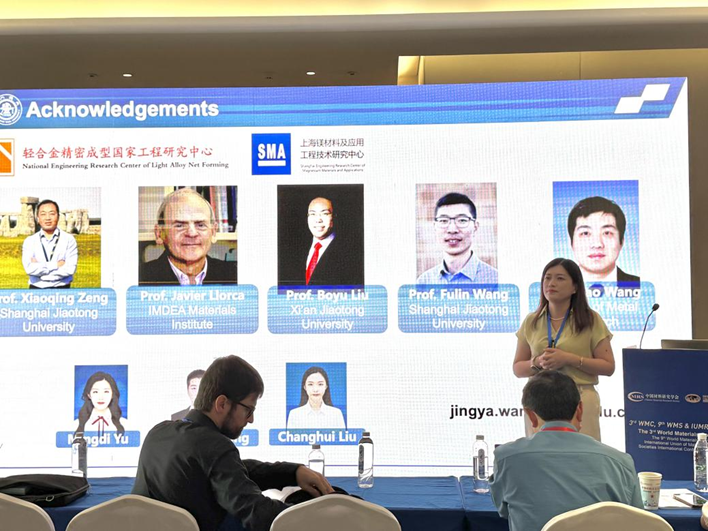
Doctoral candidates Jiacheng Wang, Chenyang Ding, Jing Luo, Yanlin Tong, and Ziyan Li from the Light Alloy Center delivered excellent oral presentations on their respective research topics: the corrosion resistance of die-cast AE44 Mg-RE alloy; the fracture toughness of extruded Mg-Gd-Y-Zn-Mn alloy; the microstructural evolution of laser-melted Al-Mg-Si alloy; Orowan strengthening by precipitates in magnesium alloys; and the microstructural evolution behavior during additive friction stir manufacturing of Mg-Gd-Y alloy. Their presentations demonstrated the innovative vitality and solid academic foundation of the student team.
The successful organization of this "Advanced Magnesium-based Alloys" symposium not only showcased the Light Alloy Center's long-term accumulated academic achievements and international influence in the field of magnesium-based alloys but also provided a high-quality platform for collaboration and exchange among global materials scientists, further promoting international cooperation and development in magnesium alloy frontier research.